To the Experts Corner
Ship-to-Shore Incident Management: Closing the Gap in Maritime Response

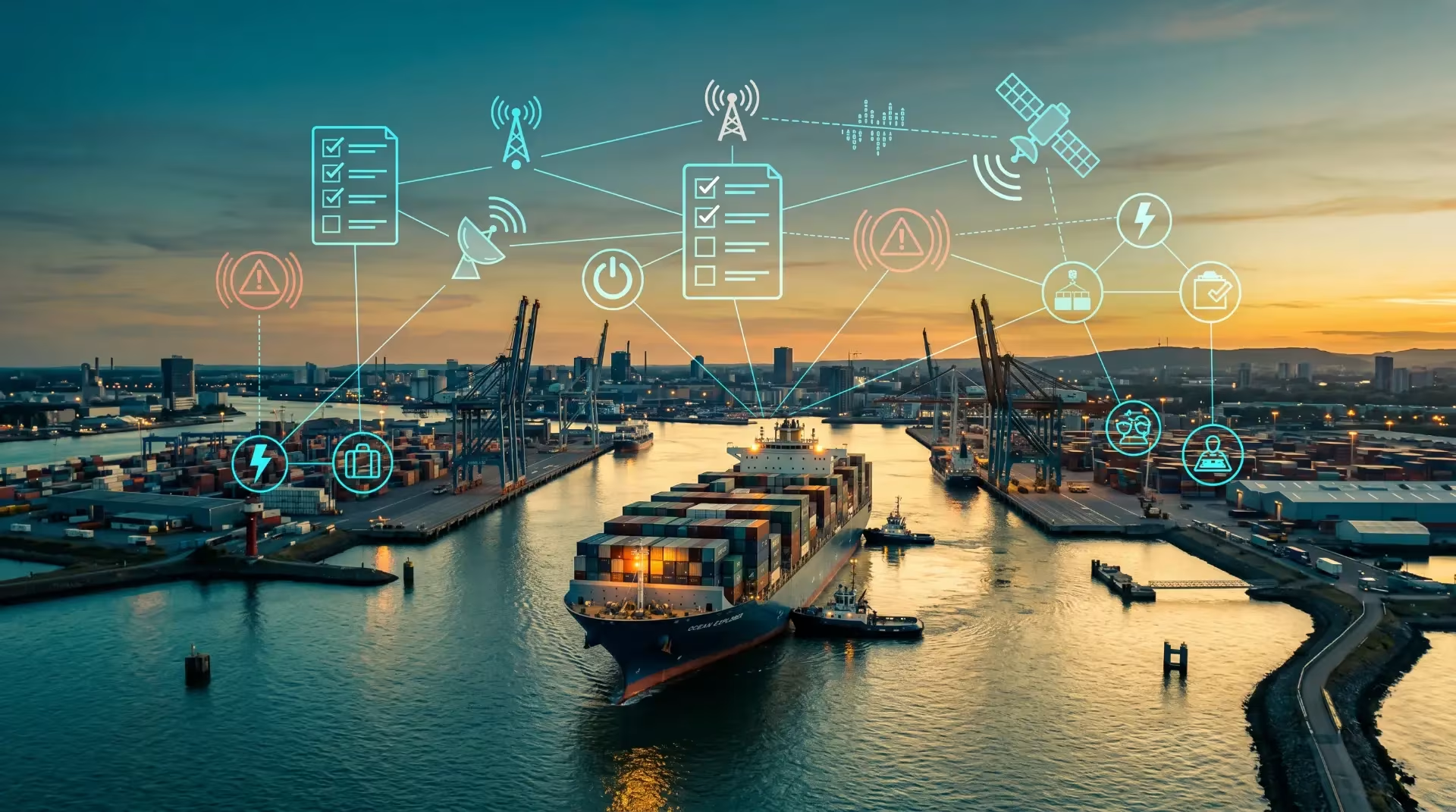
Bridging the gap between ship and shore is one of the key challenges for preparedness and response in maritime shipping. Here’s what I’ve learned about how to manage the transformation.
I'm not a shipping expert. But over the past year I've spent a lot of time talking to people who are — HSEQ directors, fleet managers, Designated Persons Ashore (DPAs) — and I keep hearing a version of the same story.
A vessel has an incident. The master calls the DPA ashore. Someone experienced picks up. The response unfolds across phone calls, WhatsApp messages, and email chains. The incident gets managed. And no one, at any point, has a complete picture of what's happening — until it's over.
Most of the time, that's fine. The DPA handles it. The vessel crew does what they're told. Things resolve. The model works — until the moment it doesn't.
What shore-side incident management actually captures
A senior HSEQ leader at a significant Norwegian shipping company described it to me plainly. His company had been using a digital incident management platform shore-side for years — the DPA and shore team coordinating, logging, managing responses in the system. What they hadn't done was bring the vessels into the same system.
When a vessel called in, the master reported what was happening. The shore team logged it, worked the response, communicated back by phone. Effective, within its limits. But the master's direct observations — the timeline as it unfolded on board, the actions taken in real time, the communications between crew — none of that was captured systematically.
"In a shore-side-only setup, a lot of information simply disappears."
That phrase stuck with me. The gap isn't between competent people and incompetent ones. It's structural: information flows one way, ship to shore, filtered through a single point of contact, and what gets logged is the DPA's account of the incident — not the incident itself.
Niall Mushet, SSHEQ Manager at John T. Essberger Group, has spent over 20 years at sea and two decades ashore. He described what closing the case looks like after a complex grounding on the Paraná river — an incident that took six months to fully resolve:
"By the time you have to do your investigation report, you've got thousands of pieces of paper on different people's desks to bring things together."
No fixed time log. Everyone with a slightly different account of events. All of it needing to be reconciled. That's not a failure of competence — it's what shore-side-only incident management produces by design.
Why the stakes are higher now
The operating environment has changed. Shipping companies are navigating the Strait of Hormuz crisis, the continuing Red Sea threat, cyber attacks on vessel systems, and the compliance demands of the ISM Code — simultaneously. The incidents are more complex, the stakeholders more numerous, and the regulatory scrutiny more intense.
When something goes wrong today, the questions come fast. From the flag state. From the P&I club. From the cargo owner. From port state control. What happened, in what sequence, and what did you do about it? If the answer requires reconstructing a timeline from phone notes and WhatsApp threads, that takes days. In a regulatory audit, the gap between what happened and what can be proven becomes a liability. In a medevac or casualty scenario, it can be something worse.
From manual to digital
Vessel-integrated incident management — where the bridge and the DPA work in the same system, in real time — is no longer a distant prospect. Improved satellite connectivity has made it operationally viable for most fleets. But Lloyd's Register's 2025 Digital Maturity Barometer puts shipping's overall digital maturity at just 2.1 out of 4, and identifies the lack of digital skills among shore-based teams as one of the primary obstacles. Not infrastructure. Not cost. People and culture.
That matches what I hear. For the people who run shore-side response today, it's not just a process — it's a professional identity. The DPA who has handled hundreds of incidents. The captain who manages emergencies through experience and instinct. When you tell them things need to change, it doesn't land as a process update. It lands as a suggestion that what they've built their careers on isn't good enough. That's not resistance to technology. It's a human response to feeling replaced.
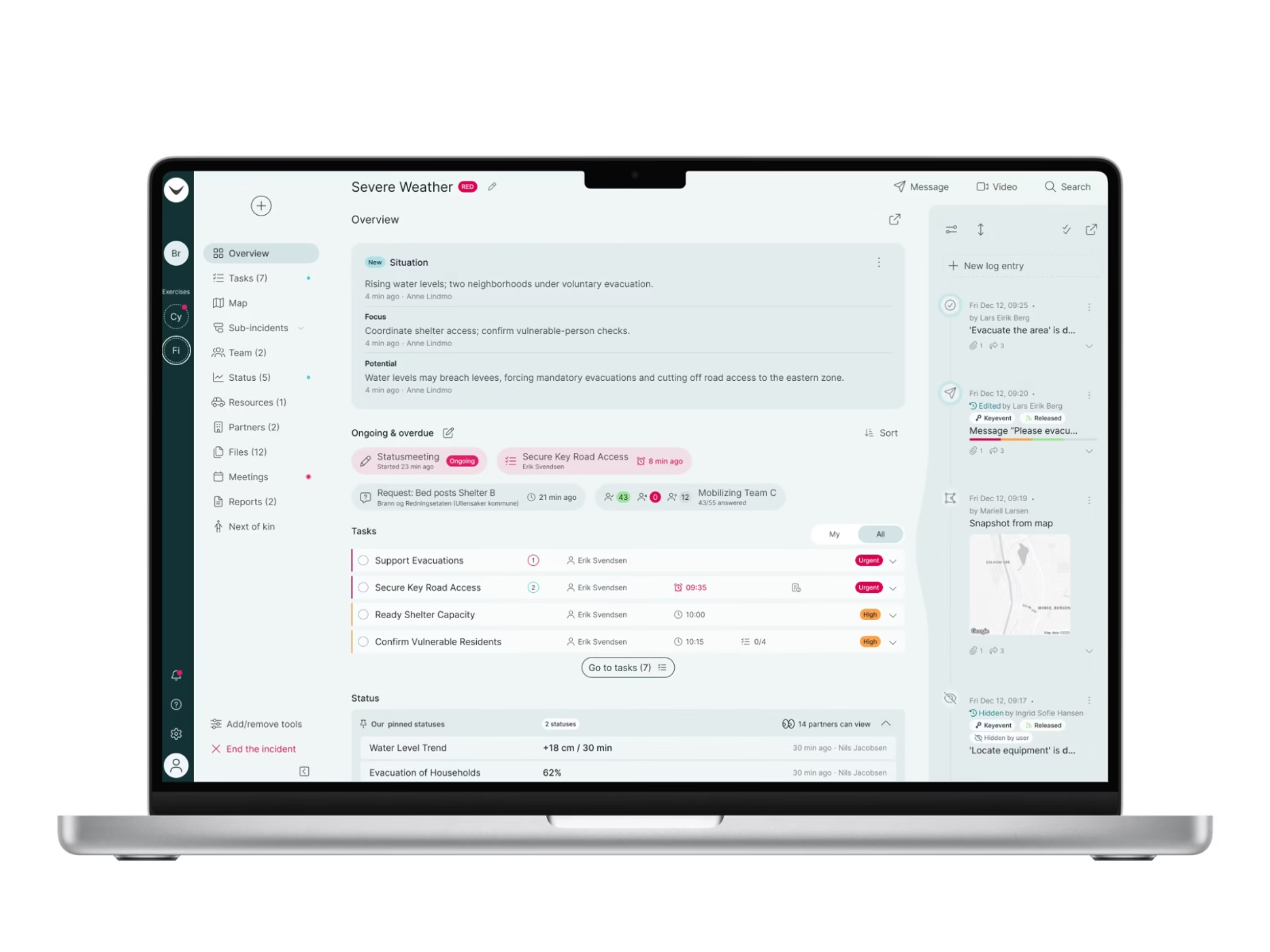
But the framing matters. The goal isn't to take the phone away from the DPA. It's to give them something shore-side-only response never could: a shared operational picture that everyone — bridge, shore team, management — can see as it unfolds, with every action and communication time-stamped as it happens. When the incident closes, the audit trail is already there. No reconstruction. Reporting that builds itself. That's not a replacement for experienced people. It's what experienced people deserve to have behind them.
The questions worth asking
If you're still managing incidents through phone calls, email chains, and WhatsApp threads, it's worth stress-testing that approach against every stage of the response lifecycle.
- Planning — do your vessel crews and shore teams prepare together, in the same system, so that when something happens the response is already familiar to everyone involved?
- Preparation — when an incident activates, how quickly can you establish a shared operational picture across ship and shore? Or does that picture only exist in the DPA's head?
- Response — are tasks being assigned, tracked, and confirmed in real time across every channel? Or are actions getting lost between a phone call and a WhatsApp message?
- Recovery — when the immediate crisis is over, how long does it take to produce a verified, time-stamped account of what happened? Hours? Days? And how much of it has to be reconstructed from memory?
- Reporting — can you show a regulator, a P&I club, or a cargo owner exactly what was known, when it was known, and what was done about it? Or does that depend on how well someone took notes?
A fully connected ship-to-shore response doesn't just close these gaps. It makes the whole organisation stronger at every stage — before an incident, during it, and long after it's over.
Pro tip
If your incident response still runs on phone calls, email chains, and WhatsApp threads, it's worth asking whether a fully coordinated digital solution — one that connects ship and shore in real time — would change what you're able to capture, coordinate, and prove when it matters most.
Read more from the "Ship to Shore" series


Talk to a RAYVN Expert
Don't just test a tool—optimize your strategy. Sit down with a RAYVN expert to verify our features meet your compliance needs and see how easy it is to manage complex incidents in real-time.
Get Started