To the Experts Corner
Ship to Shore: Are You Fully Prepared?
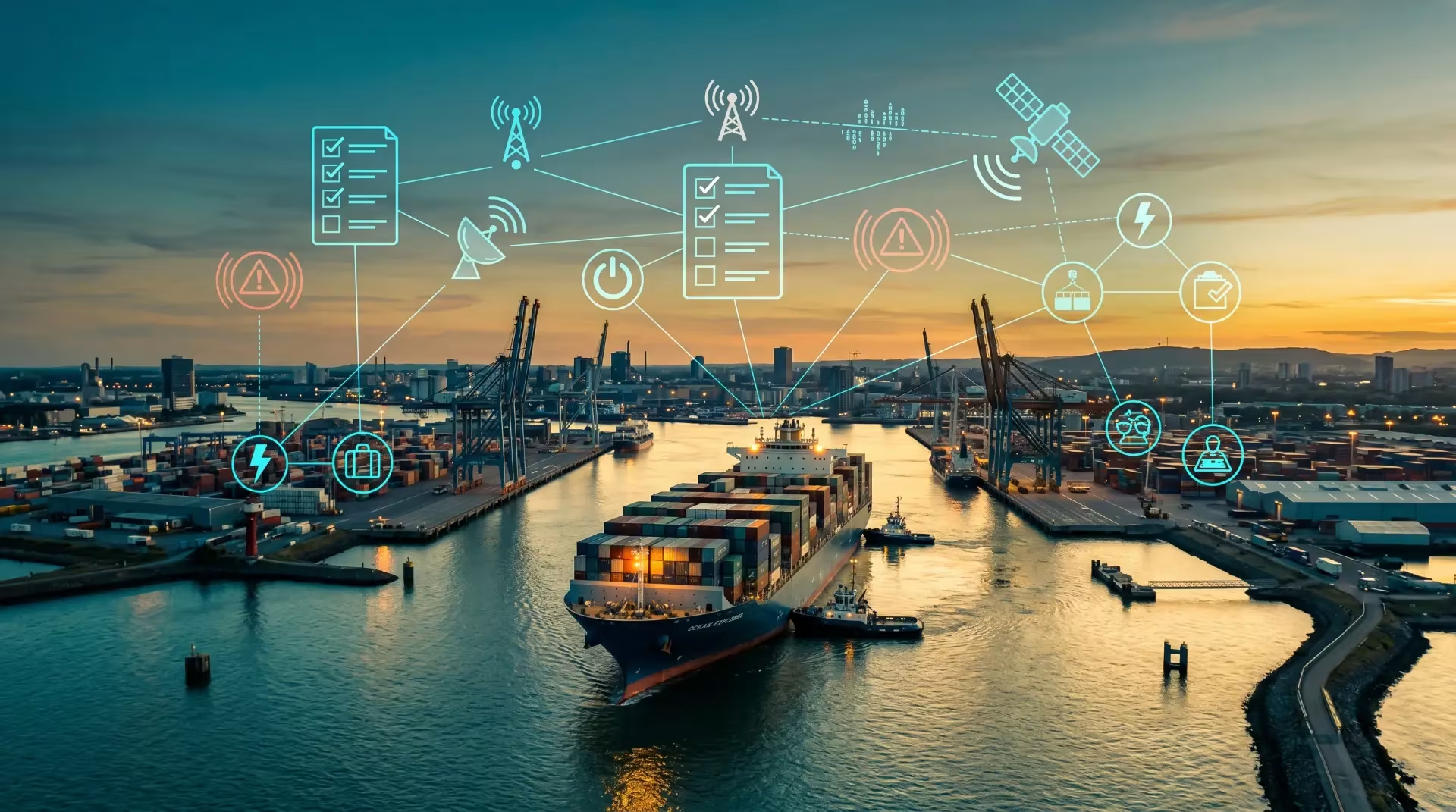

What it means to have your plans, teams, and response network ready and coordinated.
I work with maritime organisations on how they prepare for and manage incidents at sea. And the numbers tell a consistent story.
In 2024, the Norwegian Maritime Authority recorded 1,154 commercial incidents — half of them near-misses. Similar results are found across Europe, with the European Maritime Safety Agency (EMSA) putting the average at 2,660 per year.
And here’s what’s really striking. In nearly 80% of cases, the human element is the deciding factor according to EMSA. Not equipment failure. Not the weather.
The human element.
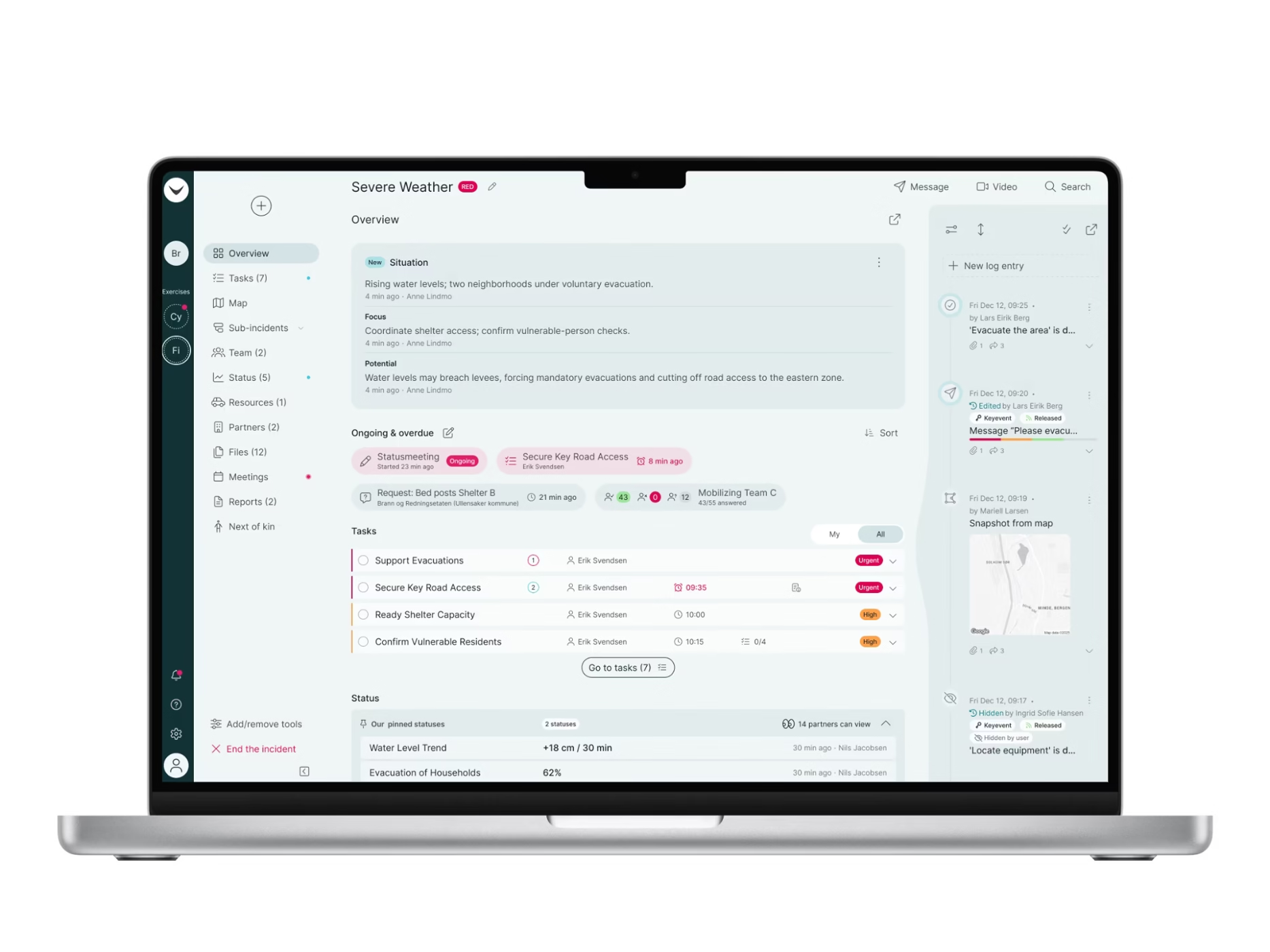
Improving ship-to-shore preparedness and coordination is one of the most direct ways to address the human element — and that holds true regardless of where an organisation stands in terms of their processes. Some run entirely manually: the vessel calls the Designated Person Ashore, and the response runs across phone calls and messaging platforms. Some are hybrid, using a digital solution shore-side while the vessel still calls in. And some are fully digital, but ship and shore have never trained together.
The details differ, but here’s the thing. Going digital for ship-to-shore preparedness — and continuously improving how ship and shore work together — makes all the difference in closing the gaps that truly matter when an incident strikes.
Three opportunities to strengthen ship-to-shore preparedness
Here are the three areas where I consistently see room to improve.
| Model | The gap | The opportunity |
|---|---|---|
| Manual | Response lives in phone calls, message threads, and individual memory. No shared plan, no single picture, no record building itself as events unfold. | Overcome fragmentation — move both sides into the same system. |
| Hybrid | The system captures the shore team’s account — not the incident itself. The crew’s timeline, actions, and bridge decisions are outside the record. | Overcome the divide — bring the vessel into the solution the shore team already uses. |
| Fully digital | Infrastructure is in place, but ship and shore haven’t trained together. Shared familiarity — the thing that makes it work under pressure — isn’t there yet. | Optimise preparedness — use one solution for exercises and for real events. |
Whatever stage you’re at, the destination is the same: ship-to-shore working together to prepare and respond seamlessly.
The ship-to-shore advantage for preparedness
Vessel crews across Europe are among the most regularly drilled workforces anywhere. Under the International Convention for the Safety of Life at Sea (SOLAS), fire and abandon-ship exercises are required every month. The drill culture on board is genuine. The question is what those drills connect to.
In most organisations I encounter, vessel exercises happen in isolation from the shore team. The crew responds as trained. The record goes into a folder. The shore team finds out when something real happens. That’s a safety problem — a shore team learning the response rhythm for the first time during an actual incident is a coordination failure waiting to happen. It’s a compliance problem too — auditors, Protection and Indemnity (P&I) clubs, and port state control want retrievable evidence of joint preparedness, not a folder of signed checklists.
The more important question is what you gain when you do it right. Integrated ship-to-shore preparedness means:
- ship and shore work from the same plans;
- everyone gains and maintains shared situational awareness;
- your emergency response network coordinates fully;
- a time-stamped log builds automatically and is audit-ready the moment the incident closes; and
- reporting can be generated instantly rather than reconstructed over days.
This is how organisations build the skills and resiliency needed to respond when an incident does strike.
Before the next drill: a readiness check
Wherever you are on the journey to seamless ship-to-shore preparedness and incident management, these are the questions worth sitting with:
- If something happens tonight, are your vessel crew and shore team working from the same plan?
- When your vessel is dealing with an incident, can the shore team see what’s happening in real time — or are they waiting for a phone call?
- When your crew runs an exercise, do you automatically generate a time-stamped log?
- Does your shore team ever drill with the vessel — or do they only show up when something goes wrong?
- When a real incident strikes, is the ship-to-shore response fully coordinated?
Extending an integrated solution to the vessel side is a real step: it means vessel licences, onboarding, and joint exercises to build the shared familiarity that makes it work.
That takes some effort, but it’s a worthwhile investment to defend crew safety, save lives, and protect the environment.
Pro tip
One barrier to ship-to-shore integration I hear consistently is digital confidence — particularly on the vessel side. Look for a solution designed the way the apps people already use every day are designed: intuitive, mobile-forward, no specialist training required. If the crew can use a smartphone, they can use it. And make sure it’s built to the security standards the maritime environment requires — connecting vessel and shore should close the gap, not open a new one.
Common questions about ship-to-shore preparedness
How often are vessel crews required to run drills?
Under the International Convention for the Safety of Life at Sea (SOLAS), fire and abandon-ship exercises are required every month. Drill culture on board is genuinely strong. The weakness is usually not frequency but isolation — the shore team rarely takes part.
How large a factor is human error in maritime incidents?
According to the European Maritime Safety Agency, the human element is the deciding factor in nearly 80% of cases — ahead of equipment failure and weather. That is why preparedness and coordination, rather than equipment alone, are the most direct levers available.
Why isn’t a shore-side digital system enough on its own?
Because it captures the shore team’s account rather than the incident itself. The crew’s timeline, the actions taken on board, and the bridge decisions all sit outside the record. Bringing the vessel into the same system is what closes that gap.
What evidence of preparedness do auditors and P&I clubs look for?
Retrievable evidence of joint preparedness — that ship and shore have exercised together and that the record of those exercises can be produced on request. A folder of signed checklists held on board does not demonstrate coordination between the vessel and the shore organisation.
- Norwegian Maritime Authority (Sjøfartsdirektoratet). 1,154 commercial incidents recorded in 2024, approximately half of them near-misses.
- European Maritime Safety Agency (EMSA). European average of 2,660 commercial incidents per year, with the human element the deciding factor in nearly 80% of cases. https://www.emsa.europa.eu/
- International Convention for the Safety of Life at Sea (SOLAS), Chapter III. Monthly fire and abandon-ship drill requirements.
Talk to a RAYVN Expert
Don't just test a tool—optimize your strategy. Sit down with a RAYVN expert to verify our features meet your compliance needs and see how easy it is to manage complex incidents in real-time.
Get Started